Learning at home
A Simple Daily Routine That Helps Young Kids Learn at Home
Young children do their best learning when the day has a predictable shape. Here is a gentle, flexible routine you can build at home, one step at a time.
By Legacy Arrows Academy · · 6 min read

If your child learns at home, even part of the time, you have probably noticed something: the days that go well rarely happen by accident. Young children thrive on rhythm. When they know what comes next, they spend less energy wondering and more energy learning. A routine does not need to be strict or perfect to help. It only needs to be predictable enough that your child can lean on it.
This guide walks through a simple daily shape you can adapt for children from kindergarten to fifth grade. Take what fits your family, leave what doesn't, and expect to adjust it a few times before it feels natural.
Why routines matter so much for young learners
Children between about four and ten are still building the skills adults take for granted: planning ahead, switching between tasks, and holding their attention on something that isn't instantly fun. A steady routine takes some of that load off their shoulders. Instead of negotiating every transition, they settle into a pattern they already know.
Routines also reduce friction for parents. When getting ready to learn is simply “what we do after breakfast,” there are fewer debates and fewer reminders. That leaves more of your patience for the moments that really need it.
Start the morning the same way every day
The first thirty minutes set the tone. Aim for a short, repeatable start: wake up, get dressed (yes, even for online school), eat breakfast, and spend a minute or two getting the learning space ready. Many families find that dressing for school helps children shift into “school mode,” even when school is at the kitchen table.
- Keep wake-up time within about half an hour of the same time on school days.
- Prepare clothes and supplies the night before so mornings feel calm, not rushed.
- Offer a breakfast with some protein and fruit; hungry children struggle to focus.
- End the morning routine with a small ritual, like a prayer, a song, or saying one thing you are thankful for.
Create a learning spot (it doesn't need to be fancy)
Children concentrate better when learning happens in the same place most days. You don't need a dedicated room. A corner of the dining table with good light, a comfortable chair, and a small basket of supplies is plenty. Keep toys and the television out of sight during lesson time, and put the most-used materials where your child can reach them without asking.
Break the day into short blocks
Young children learn in bursts. A kindergartner may manage ten to fifteen minutes of focused work before needing to move; older elementary students can usually stretch longer. Instead of fighting this, plan for it. Alternate focused blocks with short movement breaks, a snack, or time outside.
A simple shape many families use looks like this:
- Morning: the most demanding work, such as reading and math, while minds are fresh.
- Midday: lunch, outdoor play, and real rest away from screens.
- Early afternoon: hands-on or creative work such as science, art, or building projects.
- Late afternoon: free play, chores, and family time.
If your child attends live online classes, the class schedule becomes the backbone of the day, and your job is simply to protect the time around it: a snack before class, a stretch after it, and a quiet space during it.
Build in movement on purpose
Movement is not a distraction from learning; for young children it is part of how learning happens. Short breaks for jumping jacks, a dance song, a walk around the yard, or helping carry groceries all reset attention. A useful habit is a “brain break” every time a lesson ends, before the next one starts.
Use visual schedules for younger children
Children who can't yet read a clock can still follow a picture schedule. Draw or print simple pictures for each part of the day (breakfast, reading, snack, class, play, lunch) and line them up on the fridge or the wall. Let your child move a clip or a sticker as each part is finished. Seeing the day shrink is satisfying, and it answers the question “how much longer?” without you saying a word.
Keep screens for learning, not for filling time
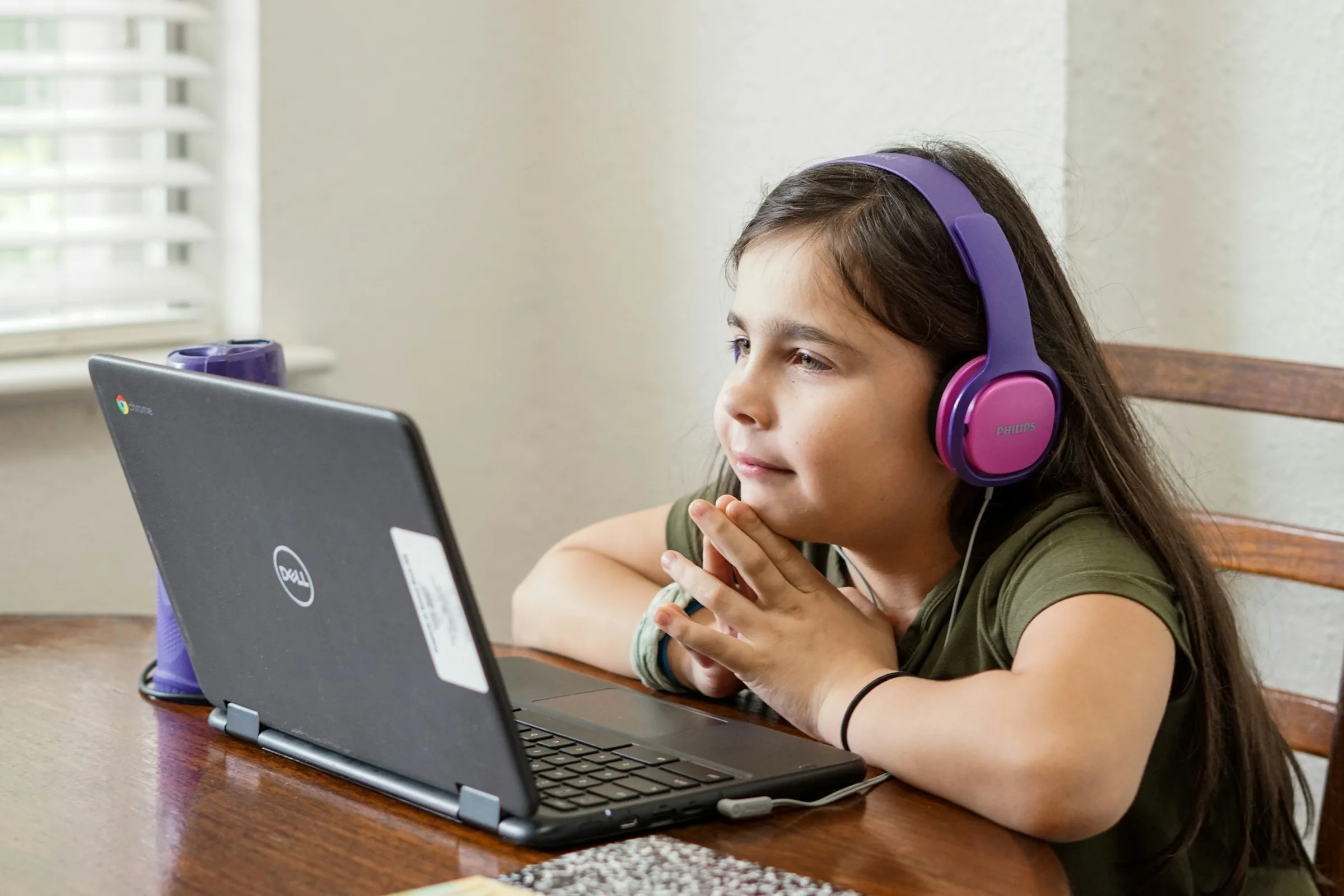
When a child learns online, the computer becomes a school tool. It helps to keep that line clear: the device is for lessons and assigned activities during school time, and other screen use happens later, if at all. Many families also keep devices out of bedrooms at night so that sleep isn't disturbed. Our article on screen time and online school goes deeper into finding that balance.
End the school day on a positive note
A short closing routine helps children feel that the school day is finished and well done. Spend five minutes together looking at something your child made or learned. Ask open questions like “What was the best part of today?” or “What was tricky?” Then help them pack away their materials so tomorrow starts fresh.
Protect evenings and sleep
A calm evening routine supports the next day's learning as much as anything that happens at the desk. Try to keep dinner, bath, reading together, and bedtime in roughly the same order every night. Reading aloud at bedtime, even for children who can already read, builds vocabulary and gives you a warm, connected end to the day.
When the routine falls apart (it will)
Illness, travel, a new baby, or simply a hard week can knock any routine off track. That is normal. When it happens, return to the anchors first: the same wake-up time, the same learning spot, and the same bedtime. The rest usually follows within a few days. A routine is a tool to make life easier, not a test to pass.
A sample day you can adapt
- 7:00 Wake up, get dressed, make the bed
- 7:30 Breakfast and a short family devotion or gratitude moment
- 8:00 Set up the learning spot
- 8:15 Reading and phonics, then a movement break
- 9:00 Math, then a snack
- 10:00 Live class or guided lessons
- 12:00 Lunch and outdoor play
- 1:00 Science, art, or a project
- 2:30 Free play and chores
- Evening: dinner, reading together, bedtime
Your times will look different, and that's fine. What matters is that your child can predict the shape of the day. Start with just two or three anchors, keep them steady for a couple of weeks, and add more only when those feel easy.
A good routine won't make every day perfect, but it gives your child something steady to stand on. And from that steady place, curiosity, confidence, and real learning have room to grow.